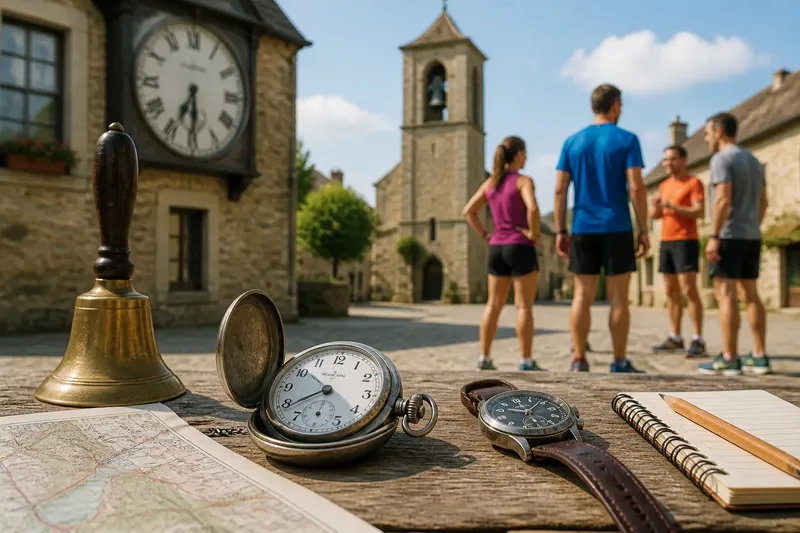
Clock, Landmark or Song: Three Ways to Find a Steady Running Rhythm
Find a steady running rhythm with a clock, safe route markers, or music, and learn which cue suits the day without turning an easy run into a race.

The common mistake with a steady running rhythm is treating every cue as a pace target. That can turn an easy outing into a contest with a watch, a landmark, or a song. Use these three methods as prompts to notice your effort, not commands to speed up.
A clock gives you a quiet moment to check in. A landmark offers a natural pause in the route. Music can lend a run a calm, repeating sound. Each works best when you can ignore it without guilt.
Start with an effort you can adjust
Before choosing a cue, decide what comfortable effort feels like today. You might notice calm breathing, loose shoulders, or the ability to speak a short sentence without gasping. Sleep, stress, hills, heat, and the surface underfoot can all change how that effort feels.
If conversation becomes strained or your hands and jaw tense, ease back or walk. These are observations, not a test to pass. Choose a familiar, low-traffic route and leave room to shorten the outing.
Method one uses a clock as a check-in
Set a quiet timer on a watch or phone, then turn the display away or hide pace information. When the alert sounds, check your breathing and shoulders. Decide whether to continue at the same effort, ease back, or walk briefly.
A clock cue is useful on a long park path or an out-and-back route with few natural markers. It can also bring your attention back from workday thoughts without asking you to study a screen. If the alert makes you hurry, silence it; a check-in should not feel like a deadline.
Say you begin an easy loop after a tiring workday and notice your shoulders rising at the first alert. You relax your arms and slow until your breathing settles. At the next alert, your posture feels looser; the useful result is a calmer effort, not a faster finish.
Method two uses landmarks to break up the route
Choose visible points that lie directly along your route: a footbridge, a fountain, a row of maples, or a path junction. Run toward one at an easy effort, then check how you feel before choosing the next. This gives a winding park path or neighborhood loop a sequence without turning it into measured splits.
Pick markers that are safe to approach and easy to recognize. Do not cross traffic, leave the path, or look away from uneven ground to reach one. If construction or a crowd blocks your usual marker, skip it or choose a safer point.
A landmark cue also makes changes in footing and exposure easier to notice. An exposed stretch may feel windier, while a gentle rise may call for shorter, easier steps. Let the route shape your effort rather than trying to make each section feel identical.
Method three uses music without following every beat
A familiar playlist can make a solo run feel less repetitive. Choose songs that leave you relaxed, and use a track change as a reminder to check your breathing or loosen your grip. There is no need to match your stride to the beat.
Music can also compete with sounds you need to hear, including bicycles, cars, other path users, and changes in the surface. Keep the volume low enough to stay aware, consider one earbud or none where conditions call for it, and follow local rules and device guidance. If a song makes you speed up tensely, skip it or pause the playlist.
Imagine you start a familiar riverside loop with a lively track and find yourself striding tensely before the first bend. You switch to a gentler song and check in at the next footbridge. The expected result is a looser effort and better attention to the path, not a particular pace.
Compare the three running rhythm cues
- Clock: Observe whether a quiet alert helps you notice tension; if it does, keep the reminder, but if it makes you watch the display or hurry, silence it and use breathing as your cue.
- Landmark: Observe whether you can identify a safe marker from the path; if you can, use it to reset, but if it requires a risky crossing or a detour, skip it and check in by feel.
- Music: Observe whether the playlist leaves you relaxed and aware of nearby sounds; if it does, keep the volume considerate, but if it masks your surroundings or pushes your effort, remove an earbud or pause playback.
- Breathing: Observe whether you can speak a short sentence comfortably; if you can, continue at an easy effort, but if speech feels strained, slow down or walk.
- Posture: Observe whether your hands, jaw, and shoulders feel loose; if they do, keep the same effort, but if tension builds, soften your grip and ease back.
- Route conditions: Observe whether the path is clear and familiar; if it is, use your chosen cue, but if crowds, construction, or uneven ground demand attention, put the cue aside and focus on safe footing.
Here is a fully worked invented situation. Say Maya has an easy loop, a watch with a timer, and a playlist, but no planned pace. She starts without music and notices calm breathing; at the first timer alert, her shoulders are loose, so she continues. Near a crowded path junction, she ignores the next cue and watches for other path users. On the quieter return, a lively song makes her stride tense, so she pauses it and slows until she can speak comfortably. Her decision is to keep the timer for quiet sections, skip music on this route, and treat crowded junctions as moments for attention rather than rhythm prompts.
Build a flexible routine across several outings
Try one cue at a time on running days that already suit you. Space the comparisons out as needed; this is not a training schedule.
- Outing one: Observe how comfortable effort feels without a prompt; if breathing and posture remain relaxed, continue without a cue, but if you lose track of tension, try one simple reminder next time.
- Outing two: Observe your response to a quiet clock alert; if it prompts a useful body check, keep it, but if it creates pressure, turn it off and rely on breathing.
- Outing three: Observe whether the route has safe, clear markers; if it does, use one or two as check-ins, but if it does not, choose a clock or body cue instead.
- Outing four: Observe whether familiar music supports a relaxed effort while leaving nearby sounds audible; if it does, use it at a considerate volume, but if it distracts you, pause it.
- Next outing: Observe which cue fits the route and your mood; if one helps you stay comfortable, keep it, but if none helps, run without a prompt.
Keep only what makes it easier to notice and adjust your effort. A shorter outing or a walk is a valid choice when the day calls for it.
Which running rhythm cue fits your situation?
Do I need a watch to find a steady running rhythm?
No. A watch can offer occasional reminders, but breathing, relaxed posture, and a familiar route may be enough. If the display makes you competitive or anxious, leave it at home or hide the pace screen.
Can landmarks work on a treadmill?
A treadmill offers few route markers, so use a relaxed body check or a song change instead. If the console draws your attention to numbers, look away when it is safe to do so.
Should music match my running cadence?
No. Choose music for mood and comfort, then let your stride find its own pattern. If a beat makes you tense or hurry, change the song or pause playback.
What should I do if my rhythm changes during a run?
Let it change. A hill, warm weather, or a tired day may call for less effort or a walk break, and a cue should help you notice that rather than override it.
Keep one cue in the background
A clock is useful when a route has few markers, landmarks connect effort to place, and music can soften a repetitive stretch. Each has a limit: alerts can draw you toward the display, markers depend on safe access, and headphones can obscure sounds around you.
You can combine cues lightly, such as using a footbridge for a check-in while keeping a quiet timer available. If the prompts begin to crowd your attention, drop one. For your next run, choose the simplest cue that fits the route—or none at all—and let it help you notice when to stay comfortable or ease back.